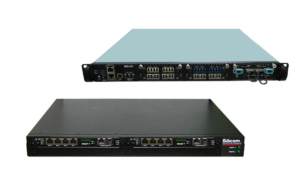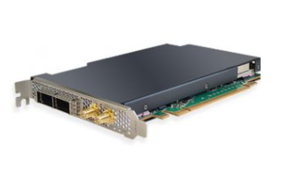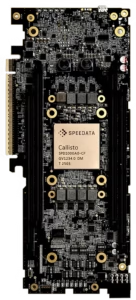

Silicom FPGA Accelerators
As the era of quantum computing approaches, the “harvest now, decrypt later” threat has shifted Post-Quantum Cryptography (PQC) from a theoretical concern to an immediate architectural requirement. However, the transition to quantum-safe algorithms-such as ML-KEM and ML-DSA-presents a massive computational challenge. These algorithms require significantly more processing power and memory bandwidth than traditional RSA or ECC, often leading to severe latency and CPU bottlenecks.
Silicom’s latest generation of FPGA-based SmartNICs and Accelerators is designed specifically to bridge this performance gap, providing the “crypto-agility” needed for the next decade of secure networking.
The Power of FPGA-Based Offloading
Unlike fixed-function ASICs, Silicom’s FPGA boards offer a programmable hardware pipeline. This is critical for PQC, where standards are still evolving. An FPGA can be updated in the field to support new NIST-approved algorithms without requiring a hardware overhaul.
Key Technical Advantages:
- Deterministic Low Latency: By offloading computationally intensive PQC operations (like polynomial multiplication) to dedicated FPGA logic, systems maintain line-rate performance even under heavy cryptographic loads.
- High-Bandwidth Memory (HBM2): Advanced cards like the N5010/N5014 series utilize on-chip HBM2 to handle the massive lookup tables and large public keys associated with quantum-resistant signatures.
- Seamless Integration (SACA): The Silicom Accelerated Crypto Adapter (SACA) integrates directly with existing software stacks like OpenSSL 3.5, NGINX, and Apache. This allows enterprises to adopt quantum-safe security without rewriting their entire application layer.
Bridging the Hybrid Gap
The transition to PQC won’t happen overnight. Most modern infrastructures will require Hybrid Mode—running both classical and post-quantum algorithms simultaneously to ensure compatibility while building a security baseline. Silicom’s FPGA solutions are optimized for these dual-stack workloads, preventing the 2x–5x performance hit typically seen when running hybrid crypto on standard CPUs.
Strategic Use Cases
- Cloud & Financial Services: Securing high-volume TLS 1.3 handshakes and identity systems against future quantum threats.
- 5G & Telecom Infrastructure: Providing sub-microsecond latency for encrypted backhaul and edge computing nodes.
- Data Sovereignty: Ensuring long-term protection for sensitive government and healthcare data that must remain secure for decades.
Silicom’s commitment to high-performance networking – from 10G to 400G – ensures that as the cryptographic landscape shifts, your infrastructure remains both performant and impenetrable.