
FPGA in Network Solutions – How Programmable NICs Improve Modern Infrastructure
In modern networking, speed is no longer the only factor that matters. Data centers, telecom operators, cybersecurity platforms and edge environments need solutions that are fast, adaptable and ready for changing workloads. This is where FPGA technology becomes especially valuable. Unlike fixed silicon chips, FPGA can be programmed and reconfigured to perform specific tasks directly in hardware.
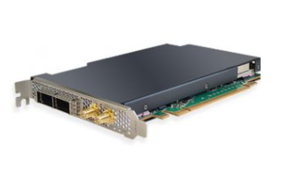
For companies looking for high-performance network acceleration, an FPGA NIC or FPGA card can be a practical alternative to traditional network adapters. It gives engineers more control over packet processing, traffic filtering, telemetry, encryption and workload offloading. In many projects, this flexibility can be more important than raw processing power alone.
What is FPGA and why does it matter in networking?
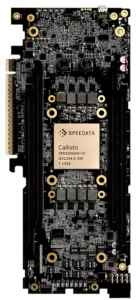
FPGA stands for Field-Programmable Gate Array. In simple terms, it is a programmable hardware platform built from configurable logic blocks and interconnects. Instead of using a fixed circuit designed for one purpose, FPGA allows developers to define how the hardware should behave.
This makes FPGA especially useful in network solutions. Network traffic is repetitive, time-sensitive and often requires predictable low-latency processing. A CPU can handle these tasks in software, but it must process instructions sequentially and share resources with other applications. FPGA, on the other hand, can process many operations in parallel and execute selected network functions closer to the physical interface.
That is why FPGA NIC products are increasingly used in environments where milliseconds — or even microseconds — matter.
FPGA NIC – a smarter approach to network acceleration
A traditional NIC transfers packets between the network and the server. A SmartNIC or FPGA NIC can do much more. It can take over selected tasks from the host CPU and perform them directly on the network card. This process is called offloading.
Typical FPGA NIC use cases include packet filtering, traffic classification, firewall acceleration, load balancing, telemetry, encryption, compression, packet capture and network monitoring. By moving these operations to hardware, the server CPU can focus on applications, databases, virtualization or container workloads.
This is particularly important in cloud infrastructure, NFV, SD-WAN, cybersecurity, 5G, financial systems and high-throughput analytics. In these environments, network performance directly affects business efficiency.
FPGA card vs traditional silicon solution
A dedicated silicon chip can be extremely fast, but it is fixed. Once manufactured, its logic cannot be changed. If the project requirements change, the hardware may need to be replaced or redesigned.
An FPGA card offers a different model. Its functionality can be updated after deployment. This makes it suitable for projects where the final architecture may evolve over time or where customers need a tailored network function that is not available in a standard adapter.
The main advantage is flexibility. Engineers can test new logic, modify packet pipelines, add custom acceleration and adapt the card to specific workloads. This shortens development cycles and reduces the risk of choosing hardware that becomes outdated too quickly.
Of course, FPGA is not always the cheapest or most energy-efficient solution. Dedicated ASICs can be better for very large-scale, fixed-function deployments. However, when customization, faster prototyping and long-term adaptability matter, FPGA often becomes the stronger option.
Why Silicom networking NIC solutions are worth considering
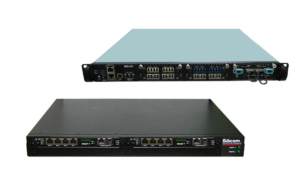
Silicom is a recognized provider of high-performance networking and data infrastructure solutions. Its portfolio includes network adapters, bypass adapters, FPGA-based cards, edge devices and SmartNIC solutions designed for demanding environments such as cloud, telecom, cybersecurity and edge computing.
A Silicom networking NIC can support advanced infrastructure where performance, reliability and hardware-level acceleration are essential. Depending on the project, Silicom networking adapters may be used for high-speed Ethernet connectivity, packet processing, traffic management, application acceleration or specialized network functions.
For companies operating in Europe, access to Silicom networking Europe distribution and technical support can be important from both logistics and project planning perspectives. Shorter supply chains, regional availability and professional product matching help organizations choose the right FPGA card or network adapter for their infrastructure.
Where FPGA cards deliver the most value
FPGA cards are particularly useful when the network layer becomes a bottleneck. This can happen when servers must analyze large volumes of packets, inspect traffic in real time or support advanced security functions without slowing down business applications.
In cybersecurity, FPGA can accelerate packet inspection and threat detection. In telecom and 5G, it can support low-latency packet processing and programmable data paths. In finance, it can help reduce latency in market data processing. In cloud and data centers, it can offload infrastructure workloads such as virtual switching, routing or storage-related operations.
Another important area is observability. FPGA-based network cards can capture, timestamp and filter packets with high precision, which is valuable for monitoring, troubleshooting and compliance.
FPGA and P4 in programmable networking
Modern programmable networking is often connected with languages and frameworks that allow engineers to describe packet processing behavior. One of the best-known examples is P4, a language used to define how packets are parsed, matched and processed in network devices.
When combined with FPGA hardware, this approach gives infrastructure teams more freedom. Instead of being limited to predefined features, they can create a custom data plane adapted to their application, service or security model.
This is one of the reasons why FPGA NIC technology is relevant for advanced network engineering. It bridges the gap between fixed-function hardware and software-only processing.
Benefits of FPGA in network solutions
The biggest advantage of FPGA is customization. A single platform can be adapted to different network scenarios, which is difficult to achieve with traditional silicon. Another benefit is parallel processing. FPGA can execute many operations at the same time, making it suitable for packet-heavy workloads.
FPGA also supports faster innovation. New features can be tested and deployed without waiting for a new chip generation. For companies that develop specialized products or infrastructure services, this can reduce time-to-market.
Long-term availability is another practical benefit. Since much of the functionality is defined by configuration, organizations can maintain and update network logic even when market conditions or hardware requirements change.
When should you choose an FPGA NIC?
An FPGA NIC is a good choice when standard network adapters are not enough. It should be considered when your infrastructure needs hardware offloading, low-latency packet processing, custom acceleration, high-speed traffic inspection or advanced monitoring.
It is also a strong option for prototype projects. If your team is still testing different packet processing models, an FPGA card provides the flexibility to adjust the hardware behavior without committing too early to a fixed architecture.
For production systems, FPGA is valuable when the workload is specialized and performance requirements are strict. Instead of forcing the CPU to handle every network function, selected tasks can be moved to the card and executed more efficiently.
FPGA in networking – a future-ready investment
Network infrastructure is becoming more complex. Cloud platforms, AI workloads, edge computing, 5G, cybersecurity and real-time analytics are all increasing the pressure on servers and network devices. In this environment, programmable hardware is no longer a niche technology. It is becoming a practical way to build faster and more adaptable systems.
FPGA NICs and FPGA cards give companies more control over how their network traffic is processed. Combined with reliable hardware vendors and proven Silicom networking adapters, they can become a strong foundation for modern infrastructure.
For organizations looking for Silicom networking Europe availability, professional product selection and advanced network solutions, NGHS.eu can help identify the right adapter, FPGA card or Silicom networking NIC for a specific technical environment.
FPGA in networking refers to the use of programmable hardware to process, accelerate or modify network traffic directly on the card. Unlike a standard chip with fixed logic, FPGA can be configured for specific tasks such as packet filtering, encryption, telemetry, traffic inspection or workload offloading.
An FPGA NIC is a network interface card equipped with a programmable FPGA chip. It can handle selected network functions directly in hardware, reducing the load on the server CPU. This makes it useful in data centers, telecom networks, cybersecurity systems, cloud platforms and low-latency environments.
A standard network adapter usually performs predefined connectivity functions. An FPGA card can be programmed for custom packet processing, acceleration and monitoring tasks. This gives engineers more control over network behavior and allows the card to be adapted to changing project requirements.
An FPGA NIC is worth considering when standard network cards are not enough for the required performance, latency or flexibility. It is especially useful for packet inspection, firewall acceleration, load balancing, encryption, high-speed monitoring, financial systems, telecom infrastructure and advanced cloud environments.
In many network workloads, FPGA cards can process selected tasks faster than CPU-based software because they work in parallel and closer to the network interface. However, performance depends on the use case, configuration and implementation. FPGA is strongest where predictable latency, offloading and custom packet processing are required.
Silicom networking adapters are used in demanding infrastructure projects where reliable connectivity, high throughput and specialized network functions are needed. They can support data centers, edge computing, telecom systems, cybersecurity platforms, virtualization, traffic monitoring and network acceleration.
A Silicom networking NIC is a network interface card designed for professional and high-performance environments. Depending on the model, it can support advanced Ethernet connectivity, bypass functionality, acceleration, SmartNIC features or FPGA-based programmability.
Choosing Silicom networking Europe distribution can simplify product availability, logistics, technical consultation and implementation planning for European companies. It may also help organizations select the right Silicom networking NIC, FPGA card or adapter for a specific infrastructure project.
Yes. FPGA is often used in cybersecurity solutions because it can process large volumes of packets with low latency. It can support traffic filtering, deep packet inspection, DDoS mitigation, encryption, packet capture and real-time network monitoring.
No. An FPGA NIC is not always necessary. For standard connectivity, a traditional NIC may be sufficient and more cost-effective. FPGA NICs are most valuable when a project requires custom acceleration, programmable packet processing, low latency or offloading of network functions from the CPU.